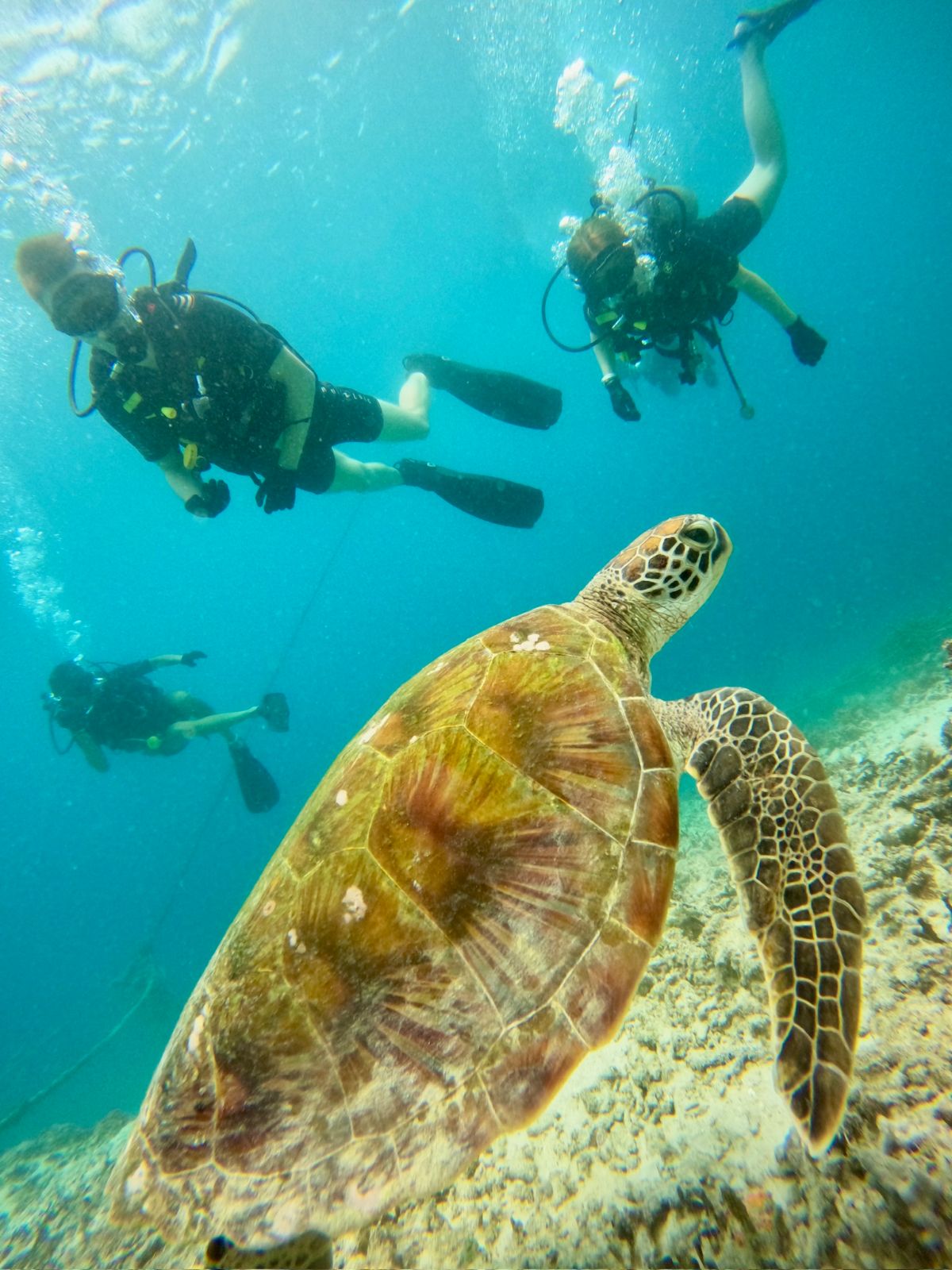

Founded in 2002, Gili Eco is one of Indonesia's longest-running island conservation organisations. Established to protect the Gili Matra Marine Park from destructive fishing practices, we have grown into a community-based organisation leading marine conservation, sustainable waste management, environmental education, and animal welfare across the Gili Islands. In 2004, we launched our pioneering Biorock reef restoration programme. Today, more than 200 Biorock reefs have been installed, creating thriving artificial reef habitats that support thousands of corals, fish, sea turtles, and other marine species. Our conservation work also includes coral gardening, Reef Check and CoralWatch monitoring, coral bleaching surveys, passive acoustic reef monitoring (Reef Sounds), turtle conservation, mooring buoy maintenance to prevent anchor damage, and marine education for divers, schools, and local communities. Beyond the ocean, Gili Eco Team works closely with the local waste management organisation (FMPL) to improve waste collection, recycling, and environmental awareness. Together, we coordinate waste collection from more than 800 businesses on Gili Trawangan, helping transport recyclable materials to Lombok while developing innovative local recycling and glass upcycling initiatives that reduce pollution and support a circular economy. Our commitment to the community also extends to animal welfare through regular veterinary clinics for the island's working horses, educational outreach in schools, environmental workshops, beach clean-ups, and sustainability training for tourism businesses. Our mission is to create a cleaner, healthier, and more sustainable future for the Gili Islands by protecting marine ecosystems, restoring coral reefs, reducing waste, promoting responsible tourism, improving animal welfare, and inspiring local communities and visitors to become active stewards of the environment.

Bali offers several eco-tourism and conservation programs focused on marine ecosystems, including sea turtle conservation, coral reef restoration, and mangrove rehabilitation. These marine camps are typically immersive volunteer or educational experiences run in collaboration with local communities in Bali. The programs combine hands-on activities with environmental education and are designed for volunteers, students, groups, and eco-tourists. Sea Turtle Conservation: Volunteers work closely with turtle conservation activities, including monitoring nesting beaches, collecting data for conservation methods, observing feeding grounds, and assisting in the care of injured turtles in rehabilitation centers. Coral Reef Protection: Coral reefs play a vital role in marine ecosystems, providing habitat for fish and crustaceans. Activities include reef cleaning, coral restoration, reef monitoring, and supporting coral planting programs while helping protect reefs from pollution. Mangrove Ecosystems: Mangroves are essential coastal ecosystems that support biodiversity, produce oxygen, and filter air and water. Volunteer activities include mangrove planting, biodiversity monitoring, and education on their role in coastal protection.

Ecotourism Nusa Penida was created by our conservation community, Nuansa Pulau, which has been committed to protecting the environment since 2017. Since then, we have planted more than 95,000 corals. We actively rehabilitate coral reefs and mangrove forests, preserve traditional seaweed farming practices, and work toward a sustainable future for the island while educating the next generation.

Eco Hero Conservation is a marine research and conservation program based in Nusa Penida, Indonesia, that trains and educates divers in the conservation of marine megafauna. We are always looking for marine enthusiasts to join our research diver training program and research team. This conservation program builds on the experience and expertise of volunteers from around the world. Coral reefs are essential to both human and marine life. They provide habitat for a wide variety of species and protect coastlines from erosion and storms. However, reefs are under severe threat from human activities such as irresponsible fishing, pollution, and climate change. Conservation is therefore essential, including keeping coastlines clean, preventing erosion, practicing sustainable fishing, avoiding coral damage, involving local communities, improving management capacity, and rehabilitating damaged reefs. We believe true conservation lies in allowing nature to function with minimal human interference. However, human activities such as plastic pollution, overfishing, and destructive practices disrupt this balance. As our work is ocean-based, we combine marine activities with ecological education. Participants may join a divemaster internship with marine ecology specialties, contributing to daily data collection on manta rays, turtles, and fish, learning about corals, and participating in coral propagation programs. We also organize beach and reef cleanups, awareness activities, and community support such as teaching English to local children. The internship includes training, materials, instructor support, and certification. Accommodation and lunch are provided on ocean training and research days.