

Nui Tuong focuses on community upliftment in rural Vietnam through education, vocational training, eco-tourism, and sustainable farming. Visitors can enjoy accommodation, food, and tours while learning about sustainable agriculture and healthy lifestyles. These efforts benefit both locals and visitors.


Association of Cambodia Child First (ACCF) is a Cambodian non-governmental organization working for the common good of society, focusing on the education of children and support for thousands of families in Bakong District. Established in 2014, ACCF has since supported an average of 100 children and thousands of the poorest families. ACCF provides free full-time English and Chinese classes five days a week, along with essential learning materials, including notebooks, textbooks, school bags, shoes, and pens. The program also offers monthly breakfasts to around 220 children to support their daily well-being and learning. The project is based in Steong Village, Bakong Commune, Bakong District, Siem Reap Province, approximately 15 kilometers from Siem Reap town. Many families in this rural area face economic hardship, making access to education and basic school supplies difficult. ACCF has identified key challenges such as lack of uniforms, learning materials, food, and transportation to school. Some children are unable to attend school due to distance and financial barriers. To address this, the organization works closely with local authorities to identify vulnerable children and families and provide targeted support. Through outreach programs, the ACCF team visits families to assess needs and ensure children receive essential educational resources. This includes school supplies, food support, and learning opportunities, helping reduce dropout rates and improve access to education. ACCF believes that all children are the foundation and future of the nation, and works to ensure they have equal opportunities to learn and grow.


Started as a free school to provide education to village children in 2015, the program expanded its approach to include organic agriculture, animal husbandry, and a platform for volunteering to share knowledge and experience, and more importantly, contribute to sustainability. Officially registered as a non-profit organisation by the government and recognised by international institutions since 2022, we provide volunteers with a unique experience of living with our team in our village program while practising humanity through our humanitarian projects in education, agriculture, and construction. We care and share, and also utilise time for activities for self-development, recreation, and relaxation, supporting inner peace and happiness through a simple way of life close to nature, with greenery around us and beautiful mountain views in front of us.


United Tansania e.V. is a German NGO, registered in 2021 and based in Tanzania. We study both hyena species: the striped hyena, classified as Near Threatened by the IUCN, and the spotted hyena, which is threatened by habitat loss, climate change, and human-wildlife conflict. To understand the drivers of sustainable carnivore survival outside protected areas, we work on mitigation solutions with communities that experience hyena conflicts. Due to their negative reputation and responsibility for livestock losses, hyenas are subject to high levels of persecution, including the use of snares. Our team, led by a veterinarian and supported by local trackers and camp staff, is committed to empowering local communities and conducting research on spotted and striped hyenas. Our long-term goals include developing effective strategies for carnivore conservation and improving animal health.
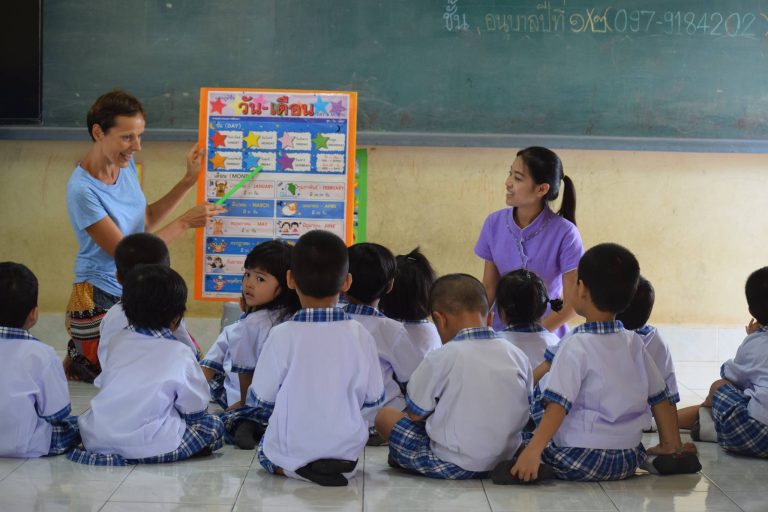

We are a public school teaching kindergarten, primary, and secondary pupils. We are based in Uttaradit, Thailand. We welcome volunteers and interns who would like to help us teach basic spoken English or Chinese (Mandarin) to our students.

Our volunteer program supports children in surrounding villages by improving access to sustainable education and helping bridge the gap between local and Western-style schooling. Private schools have 50–100 students with 5–30 pupils per class, while public schools can have up to 1500 students with 50–80 pupils per class. Due to limited teachers, classes cannot always be split. After an introductory period with a professional teacher, volunteers may teach independently once comfortable. What you can expect: Books are limited, usually 1–2 per subject per class. Students copy from the blackboard and learn at different speeds, so individual attention is important. Teachers often lack time to support every student, so volunteers help keep students engaged and support those who need extra help. We welcome ideas from volunteers to improve teaching methods, many of which continue even after they leave. An after-school library is also available where volunteers assist students from nearby villages. These students have mixed learning levels, so help with exercises, corrections, and explanations is highly needed. The library also has teaching materials and a small playground with a basketball hoop for educational games and PE activities. Location: Schools are within walking distance from host families and include classrooms, playgrounds, and staff rooms. Smaller schools may have basic play equipment, while larger public schools may have football or basketball fields. Tea and cake are provided during break time. Host families are in quiet villages near Arusha town, with shops nearby and a 20-minute walk to the city. The area is green with views of Mount Meru and a strong community atmosphere. What we expect from you: No special equipment is required, though school supplies like books, pens, and pencils are appreciated. Volunteers should be open-minded, respectful, and responsible. We provide full support during your stay and assistance with daily needs and travel arrangements. You will gain valuable insight into local culture, traditions, and everyday life beyond typical tourism experiences.


We are a non-profit organization dedicated to transforming the lives of vulnerable children in the community. Our programs focus on teaching and feeding initiatives aimed at providing children in surrounding villages with more sustainable education. Since local schools are often not as well organized as in Western systems, our goal is to help bridge this gap. We also work closely with private schools in the community to improve access to quality education.

Kilimanjaro Volunteers Exposure (which we shorten to KiVolEx), is a Volunteer organization based in Tanzania. We are a non-profit organization, aimed at improving the lives of all those in need in the local community. Specifically, we work with underprivileged groups such as women and children through providing the needed healthcare and services from our Volunteers. Established to bring Western enthusiasm, expertise and passion to tackling some of the problems which affect the most needy in Tanzania. Our ethos is that you’ll be volunteering with us, not for us. We’re far more interested in your skills and desire to help than your money. In Tanzania, KiVolEx is run by a group of experienced social workers and doctors who have seen the difference passionate Volunteers can make to people’s lives. We have support in the UK in the form of previous Volunteers, who handle the recruitment and support of new Volunteers before they fly out to begin project work.

Samaritan Volunteers is an NGO registered under the Non-Governmental Organizations Act with Registration Number 00NGO/R/2581. The organization is dedicated to supporting education for children from low-income families in the Chamazi community. It runs Samaritan School, which was founded in 2018 with the support of both local and international volunteers who regularly visit and contribute to the project throughout the year. Local teachers and volunteers work together to provide lessons for children from Kindergarten to Primary level, ensuring they receive consistent and quality education. The mission of Samaritan Volunteers is to ensure that every child in Tanzania has the right to study and access educational opportunities, regardless of their background or circumstances. The focus is on supporting children from low-income families and those facing challenging daily life situations. The vision of the organization is to create a sustainable system where every child can access a safe, vibrant, and stimulating place to learn. It strongly believes that education is a human right, not a luxury, and that every community should have access to a proper learning environment.


We, Volunteer International Adventures, are a passionate, hands-on organisation based in Africa, with a dedicated team creating meaningful volunteer experiences since 2008. We welcome students, travellers, families, friends, gappers, and career breakers to join our ethical projects in South Africa, Zambia, Zanzibar, and Zimbabwe, focusing on animal and youth projects. We believe in responsible and inclusive volunteer travel, offering opportunities that not only support important projects but also allow volunteers to fully immerse themselves in the local culture, build real connections, and create lifelong memories. Our local teams are committed to your journey by ensuring your safety, supporting your personal growth, and guiding you every step of the way so you can focus on making a genuine difference where it is needed most. Volunteers in our Knysna projects can contribute in areas such as veterinary medicine, animal care, youth development, social work, teaching, early childhood care, sports coaching, and community development with NPOs.


Volunteering with nomadic families in Morocco offers a unique cultural and personal experience. Participants live and work alongside Amazigh nomads from the Ait Atta tribes, learning about their traditions, daily life, and deep connection with nature while contributing positively to their community. The nomads spend winter months in the Jbel Saghro mountains in southeast Morocco and migrate during summer to the High Atlas Mountains, particularly the Ait Bouguemez Valley. Volunteers follow this seasonal movement and experience life in remote mountain landscapes. Daily life with the nomads centers around caring for animals such as goats, camels, donkeys, and chickens. Volunteers may help with grazing, feeding, watering, and milking animals, preparing food, collecting firewood, and carrying water. In the dry Jbel Saghro region, water is especially valuable, teaching the importance of sustainability and simple living. Living with a nomad family also allows volunteers to experience breathtaking sunsets, starry nights, and the beauty of the Atlas Mountains. It is an opportunity to disconnect from modern routines and appreciate nature and community life. Another important part of the project is teaching English, French, or Spanish to nomad children. Many families value education, and volunteers can support children’s learning while building strong relationships with the community. No previous experience is required, as guidance and support are provided throughout the program. This experience is ideal for people interested in cultural exchange, nature, and meaningful community engagement. While the nomadic lifestyle can be challenging, it can also be deeply inspiring and life-changing.