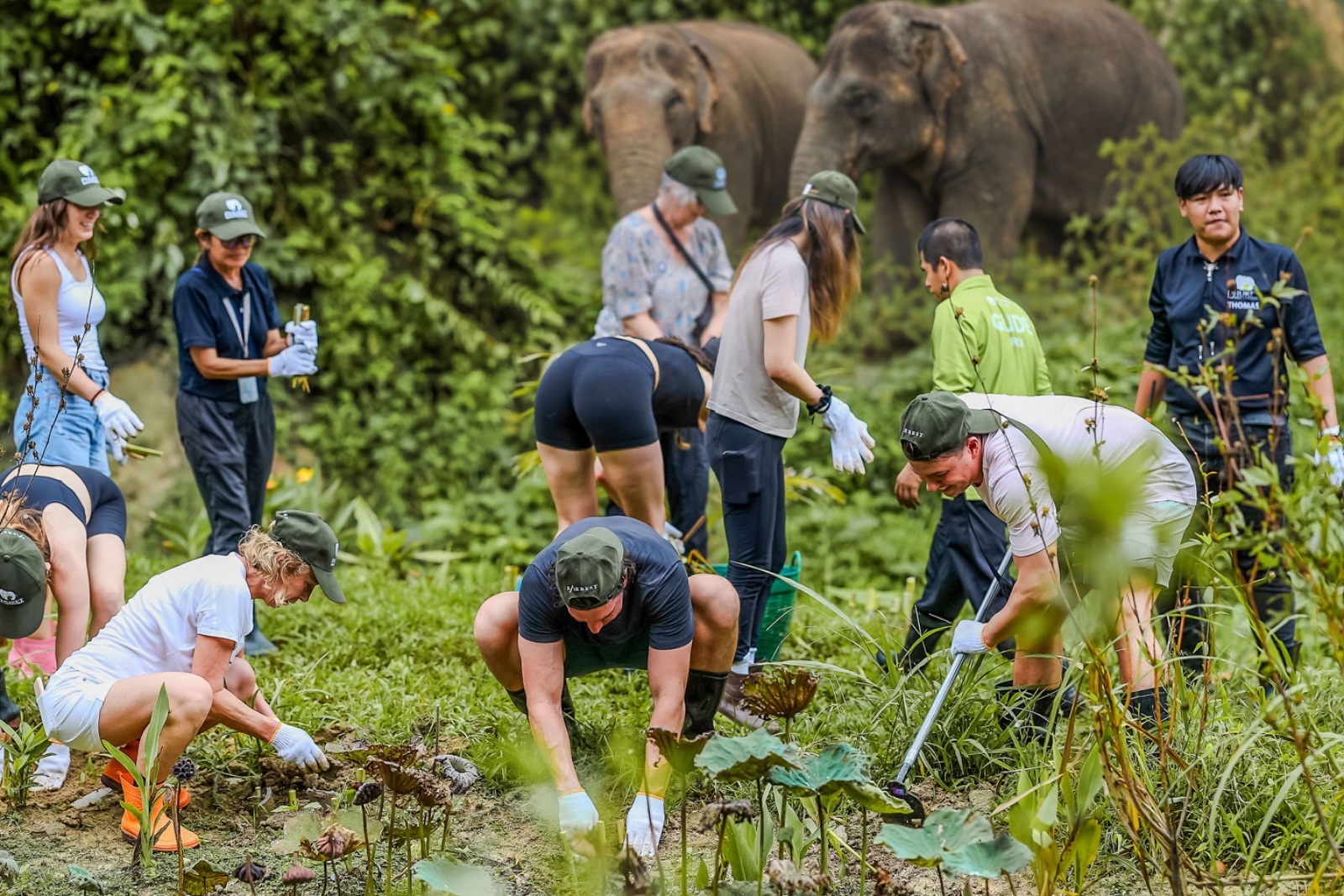
Phuket Elephant Sanctuary was founded in 2016 by Montri Todtane, a local from Paklok in Northeast Phuket. After more than a decade working with elephants in traditional tourism, Montri witnessed firsthand the physical and emotional impact that riding, performances, and demanding working conditions could have on elephants. Inspired by elephant conservationist Lek Chailert, he decided there had to be a better way. He closed his former elephant camp and opened Phuket’s first ethical elephant sanctuary: a place where rescued elephants can finally retire and simply be elephants. Today, our sanctuary covers 30 acres of tropical jungle bordering Khao Phra Thaeo National Park. Since opening, we have provided a home to more than 20 elephants rescued from tourism, riding camps, shows, and the logging industry. Here, elephants are given the space and freedom to roam, forage, socialize, and bathe on their own terms. Our mission is simple: to let elephants be elephants. Since April 2026, Phuket Elephant Sanctuary has become completely hands-off. There is no touching, bathing, or feeding with visitors. Instead, we believe meaningful experiences come from respectfully observing elephants behaving naturally and learning about their individual stories, welfare, and conservation. Over the years, we have continued to grow, opening Thailand’s longest canopy walkway in 2020 and Phuket’s first dedicated elephant hospital in 2025, supporting elephants in need across Southern Thailand. Volunteers become part of this ongoing story. Rather than interacting directly with elephants, you work behind the scenes alongside our team, helping with practical tasks such as preparing supplementary food, harvesting elephant food, maintaining the sanctuary, cleaning night shelters, composting elephant dung, and supporting other projects depending on what is needed at the time. By volunteering with us, you support rescued elephants and help promote a more ethical and respectful future for elephants.

Lanta Animal Welfare was founded by Junie Kovacs in 2005. Her mission was to end the suffering of the hundreds of homeless, abused, and injured animals on Koh Lanta. To date, we have sterilized and treated over 85,000 animals, and with your support, we continue to grow, helping more and more animals each year. At Lanta Animal Welfare, we provide critical, life-saving treatment to injured and sick stray animals across Koh Lanta. Our veterinary team delivers urgent medical care, including emergency first aid, vaccinations, wound treatment, and preventative healthcare for animals in distress. LAW’s main focus is the treatment of stray animals and sterilizations. Animals are brought to us for many different conditions, from skin problems to road traffic accidents and poisonings. Stray animals will sometimes stay with us for several weeks to ensure they are fit and well before they are released back where they came from. Unfortunately, some of the animals that find themselves needing our help are unable to return to where they came from. This may be because they were too young upon their arrival, they are at risk of abuse, or simply because they have undergone treatment for such a long period that we can no longer return them. These animals will remain at the centre and will join our rehoming programme, with over 150 animals each year finding loving homes both here in Thailand and across the world.
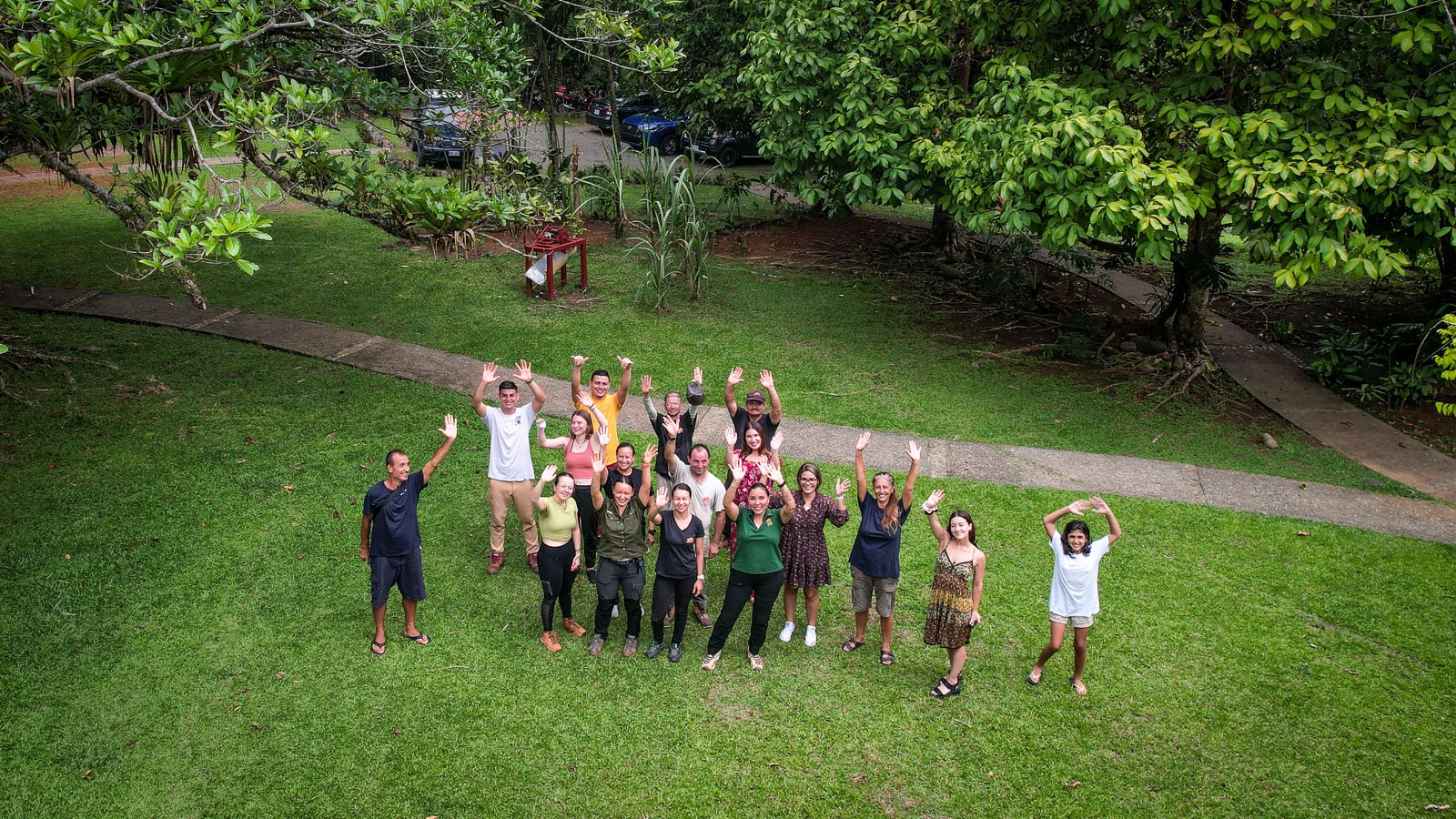
Kids Saving the Rainforest (KSTR) is a nonprofit wildlife conservation organization based in Quepos, Costa Rica, dedicated to protecting the country's rich biodiversity. Founded in 1999, KSTR rescues, rehabilitates, and releases injured, sick, and orphaned wildlife through its rescue centre, while providing lifelong care for animals that cannot be returned to the wild. Beyond wildlife rescue, KSTR works to protect Costa Rica's ecosystems through environmental education, reforestation, and wildlife bridge projects, helping reduce the threats facing native wildlife and promoting long-term conservation.
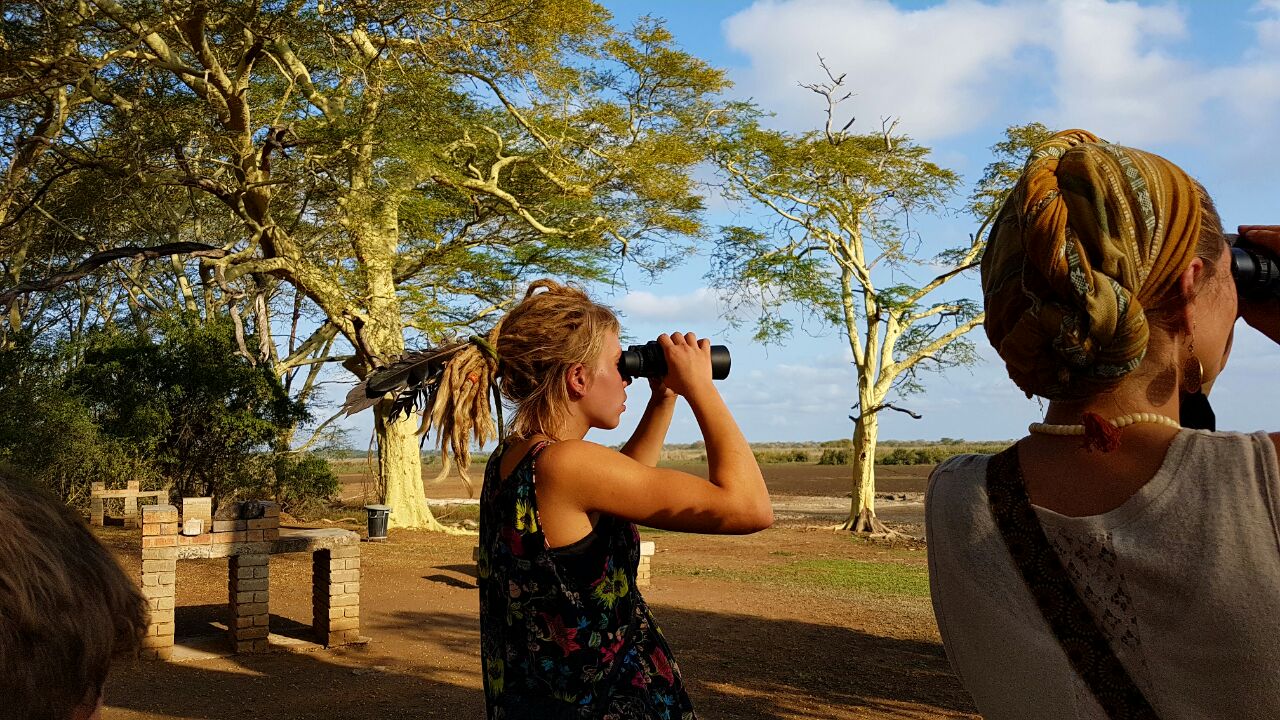
Our conservation camp is a welcoming base for travellers, students, and volunteers passionate about wildlife, nature, and environmental conservation. Surrounded by unspoiled beaches, forests, lakes, and rich Zulu culture, the camp offers a unique opportunity to experience the natural beauty of northern South Africa while making a meaningful impact. Our primary mission is to help protect the remaining hippos of Lake Sibaya, South Africa's largest freshwater lake. Volunteers contribute to wildlife monitoring, beach clean-ups, biodiversity surveys, and other conservation projects. Those with practical or creative skills can also assist with building and improving our base camp. Located near Sodwana Bay, famous for its world-class scuba diving, the camp is the perfect place to combine conservation, adventure, and an authentic African experience.
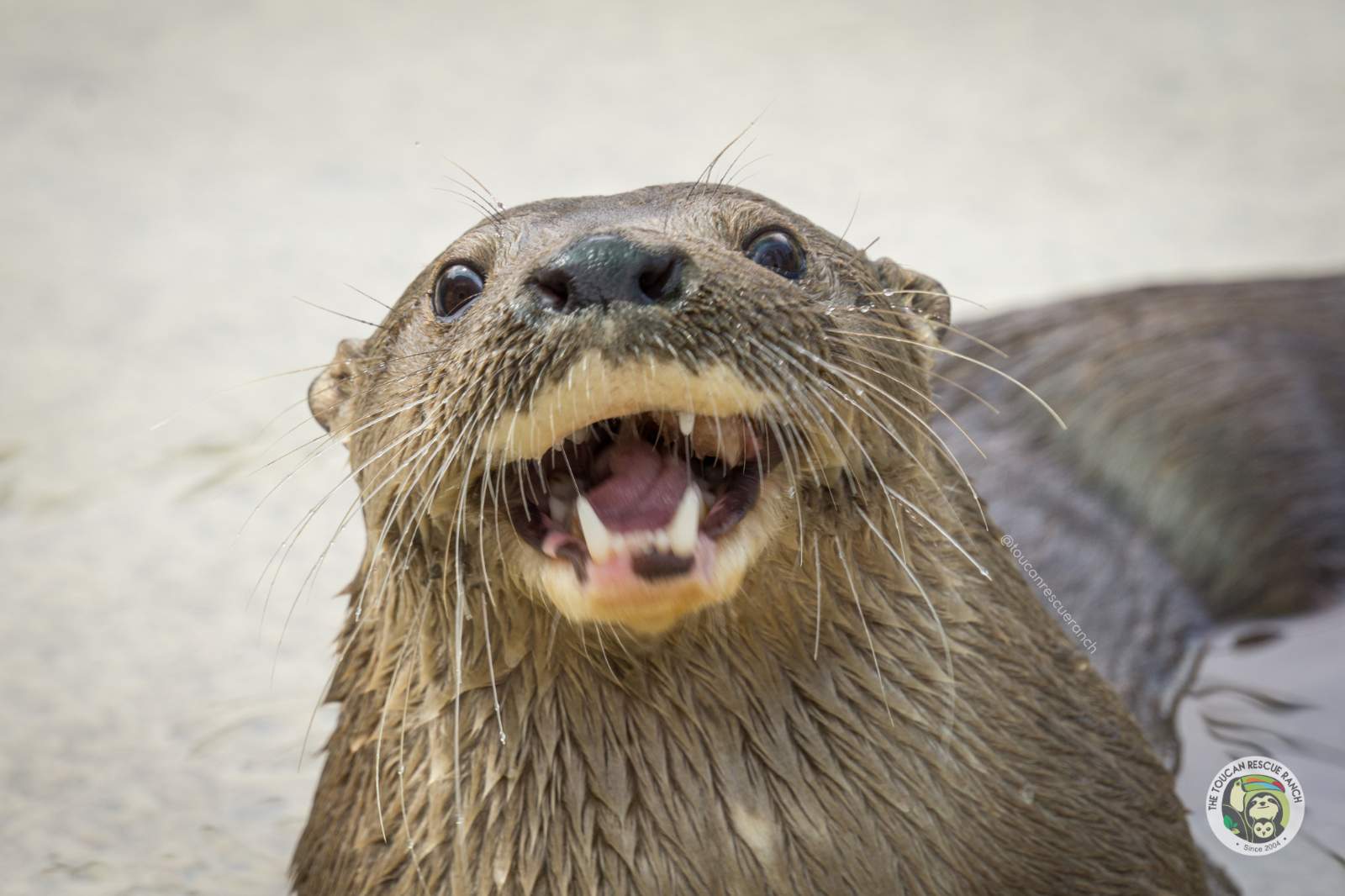
The Toucan Rescue Ranch (TRR) is a wildlife rescue and rehabilitation centre dedicated to rescuing, rehabilitating, and releasing Costa Rica's native wildlife. Working alongside the Ministry of Environment and Energy (MINAE), TRR provides expert care for injured, orphaned, and confiscated animals, with the goal of returning them to the wild whenever possible. Built on the pillars of conservation, education, and research, TRR offers hands-on internship programmes for students and aspiring conservationists, providing practical experience in wildlife rescue, rehabilitation, and animal care. TRR operates two facilities: - Headquarters (HQ), San Isidro, Heredia – Rescue centre, veterinary clinic, rehabilitation facilities, and wildlife sanctuary. - Release Site (RS), Nazareth, Sarapiquí – Final rehabilitation and pre-release facility for rescued wildlife.
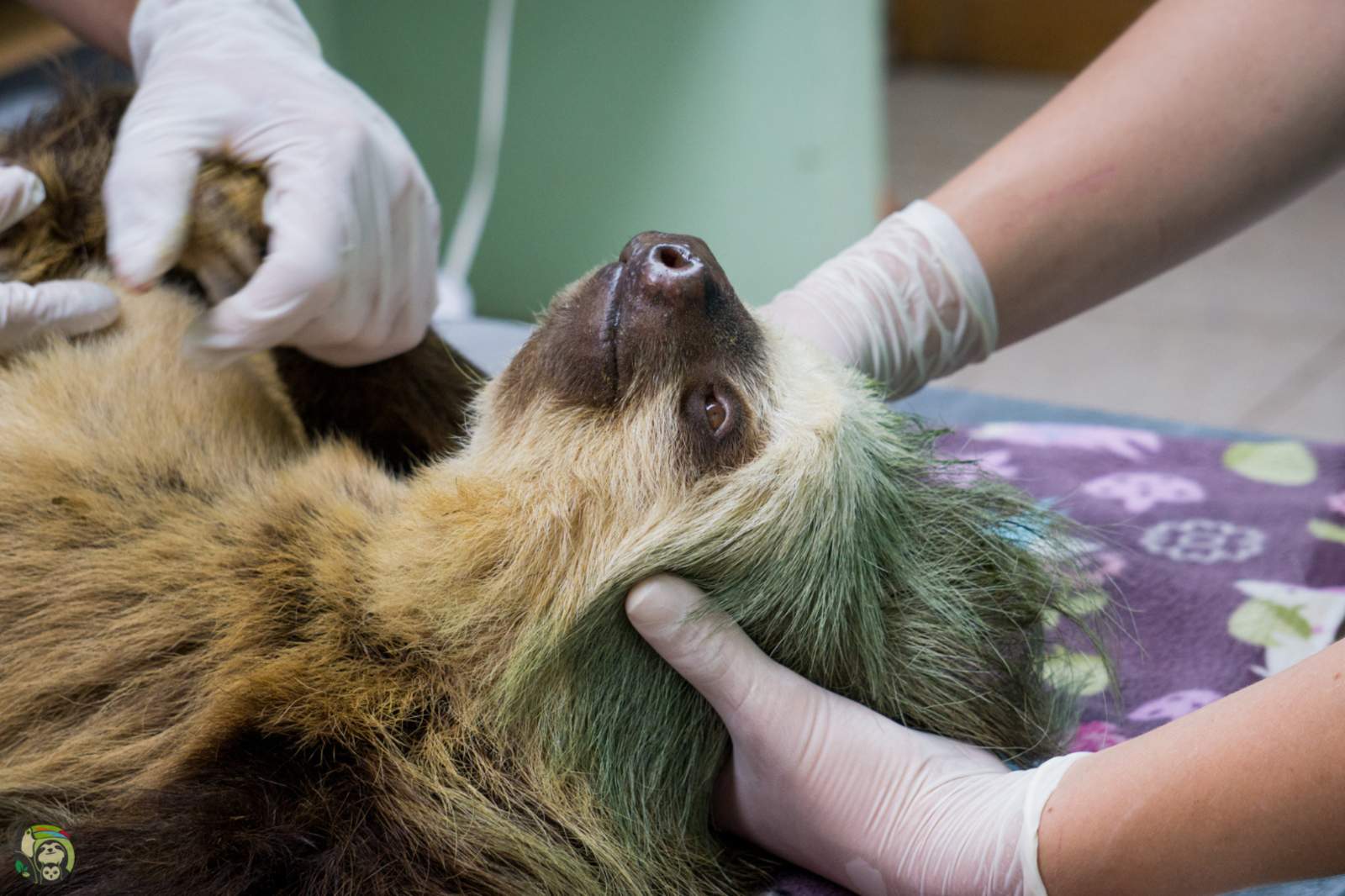
The Toucan Rescue Ranch (TRR) is dedicated to rescuing, rehabilitating, and releasing Costa Rican wildlife. Our work is built on three core pillars—conservation, education, and research—to help create a brighter future for the country's native wildlife. We provide specialised care for sick, injured, and confiscated animals referred to us by Costa Rican government agencies. TRR works closely with the Ministry of Environment and Energy (MINAE), which brings injured and displaced wildlife to our rescue centres. Animals receive expert veterinary treatment, rehabilitation, and, whenever possible, are successfully released back into their natural habitats. Our internship programmes offer hands-on experience in wildlife rescue, rehabilitation, and conservation, making them ideal for students and aspiring conservationists who want to gain practical skills while making a meaningful impact. TRR operates across two locations: Headquarters (HQ) – San Isidro, Heredia Home to the rescue centre, veterinary clinic, quarantine, and rehabilitation facilities. Houses the wildlife sanctuary for animals that cannot be released and require lifelong care. Offers educational guided tours focused on wildlife conservation and environmental education. Release Site (RS) – Nazareth, Sarapiquí Functions as a second rescue centre. Serves as the final rehabilitation and pre-release site for many rescued animals before they return to the wild.
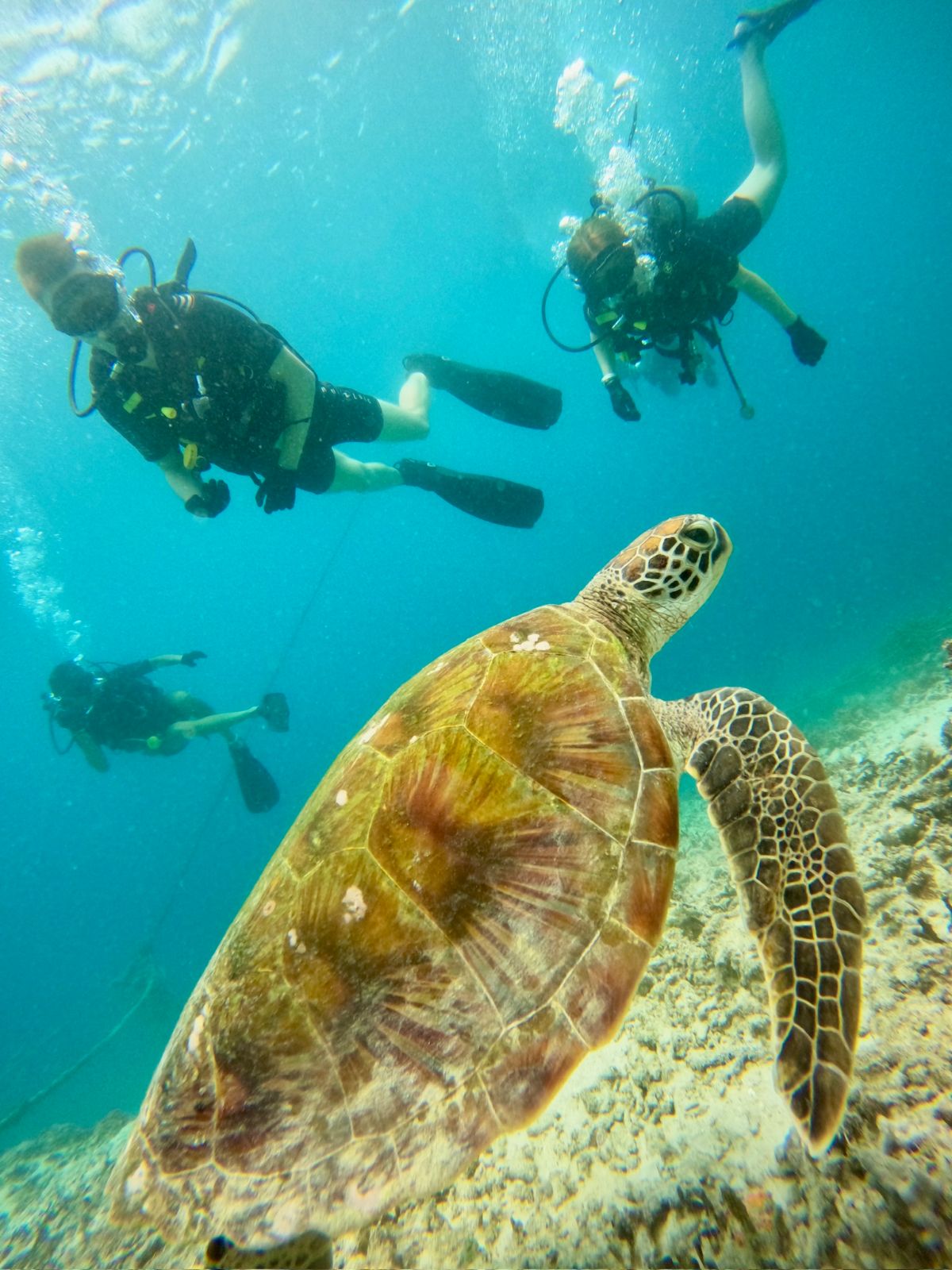
Founded in 2002, Gili Eco Trust is one of Indonesia's longest-running island conservation organisations. Established to protect the Gili Matra Marine Park from destructive fishing practices, we have grown into a community-based organisation leading marine conservation, sustainable waste management, environmental education, and animal welfare across the Gili Islands. In 2004, we launched our pioneering Biorock reef restoration programme. Today, more than 200 Biorock reefs have been installed, creating thriving artificial reef habitats that support thousands of corals, fish, sea turtles, and other marine species. Our conservation work also includes coral gardening, Reef Check and CoralWatch monitoring, coral bleaching surveys, passive acoustic reef monitoring (Reef Sounds), turtle conservation, mooring buoy maintenance to prevent anchor damage, and marine education for divers, schools, and local communities. Beyond the ocean, Gili Eco Trust works closely with the local waste management organisation (FMPL) to improve waste collection, recycling, and environmental awareness. Together, we coordinate waste collection from more than 800 businesses on Gili Trawangan, helping transport recyclable materials to Lombok while developing innovative local recycling and glass upcycling initiatives that reduce pollution and support a circular economy. Our commitment to the community also extends to animal welfare through regular veterinary clinics for the island's working horses, educational outreach in schools, environmental workshops, beach clean-ups, and sustainability training for tourism businesses. Our mission is to create a cleaner, healthier, and more sustainable future for the Gili Islands by protecting marine ecosystems, restoring coral reefs, reducing waste, promoting responsible tourism, improving animal welfare, and inspiring local communities and visitors to become active stewards of the environment.
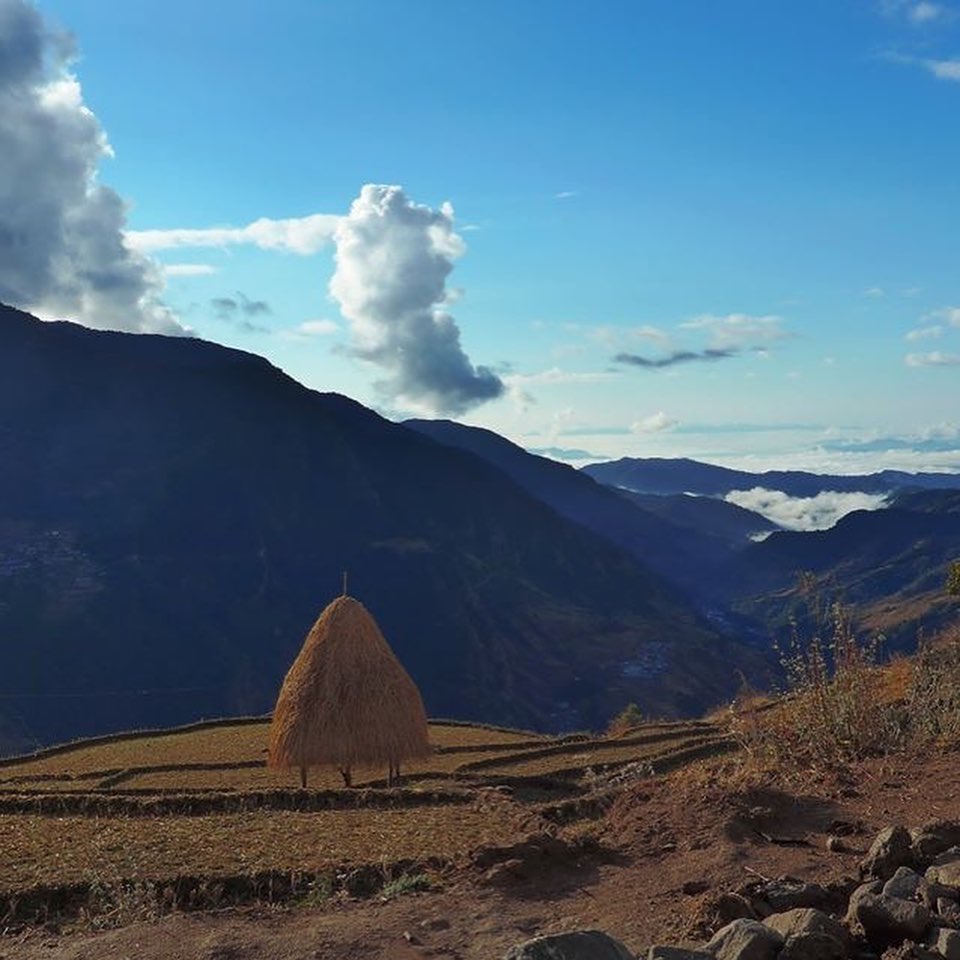
Stand Up 4 Elephants (SU4E) is a Belgian and Nepalese non-profit organization that has been working in Chitwan, Nepal, since 2013. The organization was founded after its founders witnessed the poor conditions endured by captive Asian elephants in the local tourism industry. Since then, SU4E has worked directly with elephant owners and mahouts (caretakers), providing free veterinary care, foot treatments, vitamins, and other support to approximately 50 elephants in the region. In 2018, SU4E began building its own sanctuary near Chitwan National Park—a model camp demonstrating how captive elephants can be cared for more ethically with minimal resources. Beyond elephant welfare, SU4E runs community programs that support local mahout families, promote eco-farming, provide educational opportunities for children, and care for street dogs. The organization also promotes environmentally responsible tourism through sanctuary visits and awareness campaigns. Run by a small, dedicated team in Nepal alongside its co-founders based in Belgium, SU4E puts the welfare of elephants first. The organization aims to create lasting, sustainable change through education, compassion, and community partnerships rather than short-term solutions.
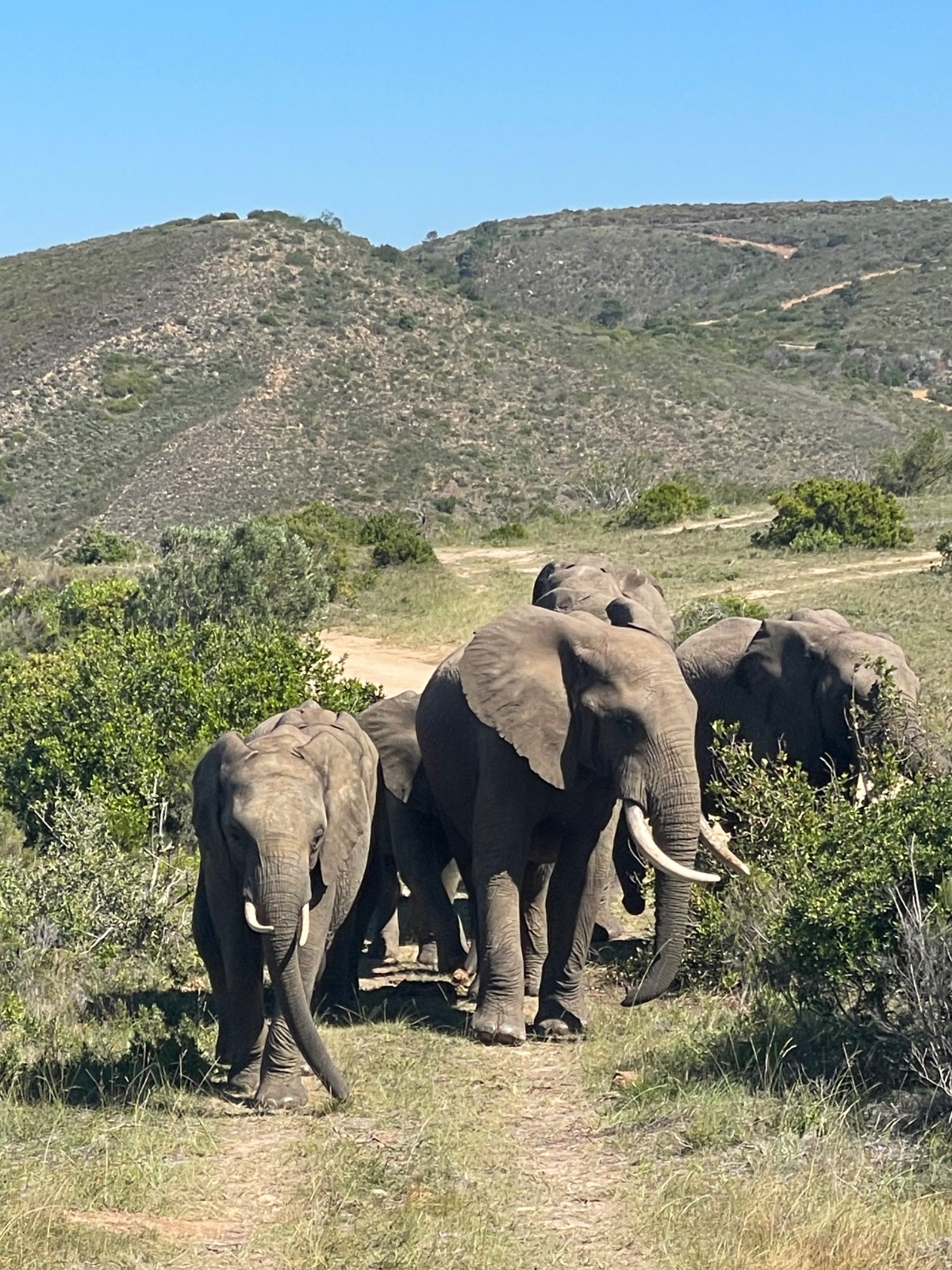
TAILOR-MADE TRIPS Odyssey creates tailor-made trips for schools, student groups, volunteers, and travellers who want a journey designed around their goals, interests, and budget. Whether you are looking for a conservation-focused experience, an educational safari, a meaningful volunteer program, or a unique South African adventure, we work closely with you to create an itinerary that meets your needs from start to finish.
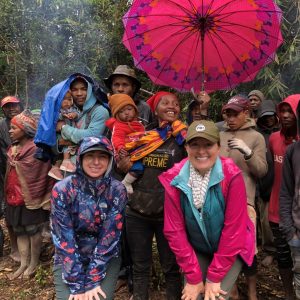
In 2010, Dr. Edward Louis, who has worked in Madagascar since 1998, established the Madagascar Biodiversity Partnership (MBP), a Malagasy non-governmental organization created to expand innovative conservation projects throughout the country. MBP is dedicated to protecting Madagascar’s unique forests and biodiversity while sustainably improving the quality of life for local communities that rely heavily on natural resources. Guided by the belief that “everything is connected,” or “Mampifandray ny tontolo,” MBP combines conservation, education, research, and community development to achieve long-term sustainability for both people and the environment. Through this volunteer program, MBP aims to support conservation research, community-based conservation, education, and outreach activities. Volunteers contribute to projects that help preserve the environment, support sustainable development, and strengthen local understanding of conservation challenges and solutions. MBP works closely with local communities to encourage environmental awareness, improve educational opportunities, and create empowerment initiatives that benefit residents living near conservation areas. Volunteers may assist with environmental education, research support, outreach programs, and other community-focused activities designed to create a lasting positive impact. A 15+ hour drive southeast of Antananarivo, KAFS is located within the rural Kianjavato Commune, which is comprised of about a dozen villages and a growing population of at least 12,000 residents. The climate at Kianjavato is quite warm and humid. The rainy season is from the end of November through April. The dry season is cooler, extending from May through October.
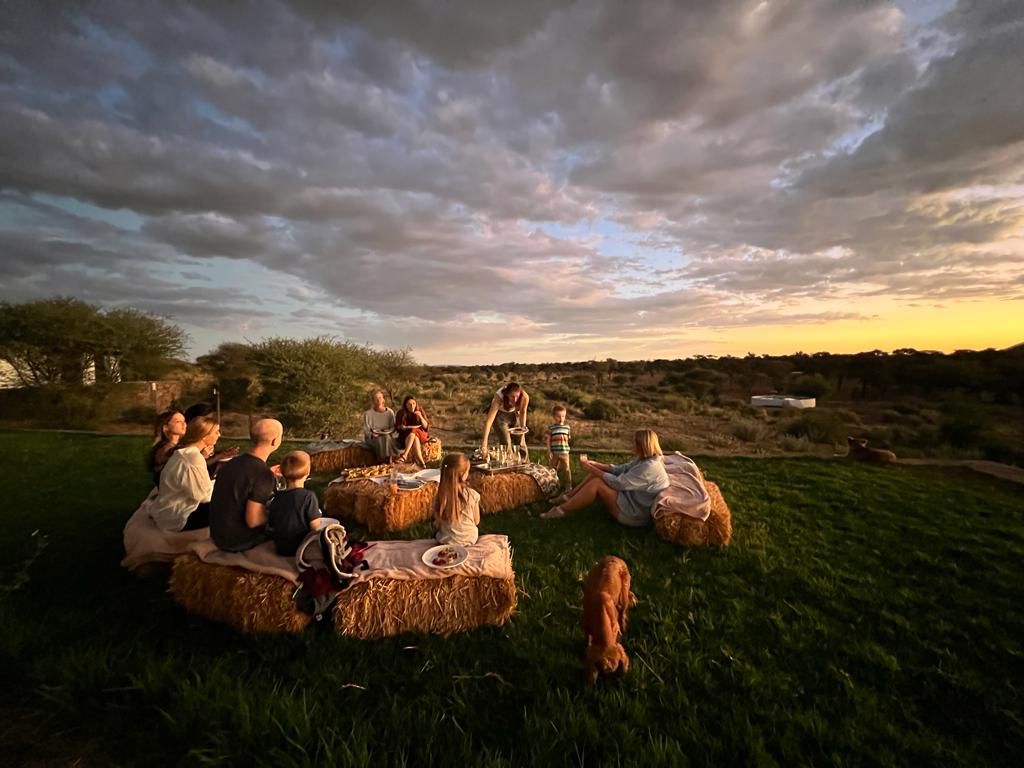
Chief Joseph of the Nez Perce had a dream—the dream that all nations could live in peace with one another. Joseph’s Dream Stud is more than just a breeding stud. We are training both people and horses, but most importantly, we let horses teach people: how to listen... listen to nature, listen to silence, and listen to the ancient rhythms of the Earth. The healing power that comes from connecting with the souls of these incredible creatures allows us to open up and learn the language needed to make Joseph’s dream a reality in this world—between people, between people and animals, and between people and the planet. Joseph's Dream Stud is situated at Sandwerf Retreat in Namibia, surrounded by one of the country's most beautiful landscapes. A riverbed runs through the property, shaded by camel-thorn trees that are hundreds of years old. The founders of Joseph's Dream Stud & Training Center are Annika Funke-Barnard and Leon Barnard. Annika is the breeder, manager, and photographer of the Joseph's Dream horses. Her husband, Leon, is the architect and designer of Sandwerf Farm and its beautiful holistic setting.
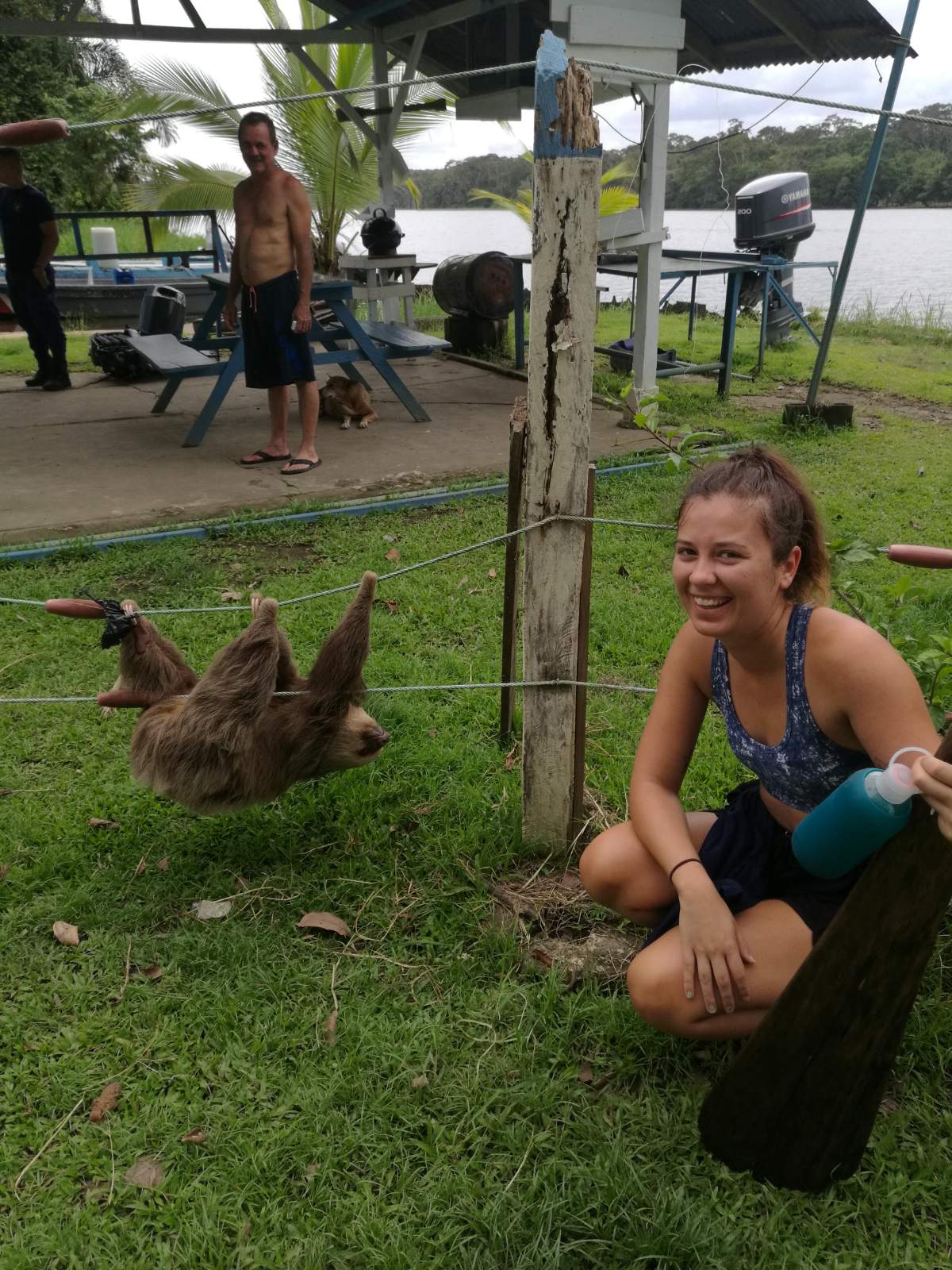
Our main mission at Tortugas de Pacuare is to protect endangered sea turtles such as the Leatherback sea turtle, Hawksbill sea turtle, and Green sea turtle. With the support of the local community and international volunteers, we aim to conserve the environment. By working with sea turtles, local communities, and environmental education programs, we strive to educate people on the importance of protecting the valuable marine ecosystem. Turtle seasons: - Leatherback turtle season: from the last week of February to the end of June - Green turtle season: from July to September - Hawksbill turtle season: from April to August One important thing to remember when working in animal protection is that wildlife is unpredictable, so we cannot guarantee exactly what your experience will be like. The only certainty is that nature is amazing and always full of surprises—that is why we love working to save turtles. Working with turtles: Working with turtles involves night patrols on the beach. Alongside local guides and other volunteers, you will patrol the beach to collect turtle eggs and relocate them to a turtle hatchery, where they will be protected from poachers. You will also work at the hatchery, caring for the eggs and newly hatched turtles, ensuring they are well prepared for their journey back into the sea. The Leatherback Turtle: Leatherbacks are the largest turtles on Earth, growing up to seven feet (two meters) in length and exceeding 2,000 pounds (900 kilograms) in weight. These reptilian relics are the only remaining representatives of a family of turtles whose evolutionary history dates back more than 100 million years. Once widespread across most oceans except the Arctic and Antarctic, the leatherback population has declined significantly in many regions. Unlike other sea turtles, leatherbacks do not have hard, bony shells. Instead, they have a flexible, leathery carapace that gives them their name.
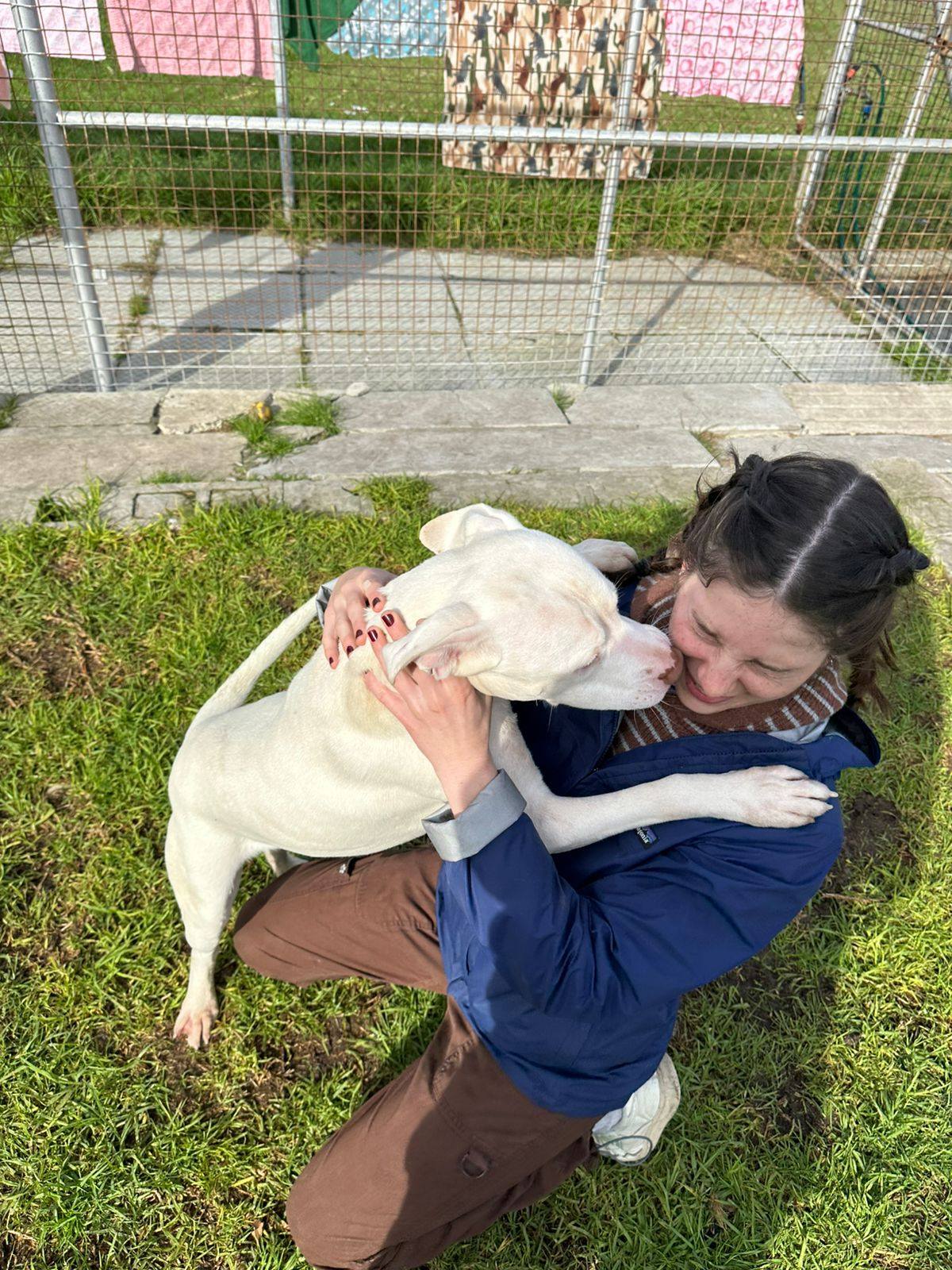
Stay Africa Volunteers (previously known as SASTS Working Adventures) was established in 1972 to provide affordable travel opportunities for South African students. It served as the travel division of NUSAS, the National Union of South African Students, whose activities originated during the Apartheid era. For over 40 years, we have played an integral role in facilitating student and youth travel and are well-equipped to help young people realize their travel dreams. We have achieved this by working with reputable and internationally recognized partners from around the world. Stay Africa's volunteer programs are operated in accordance with the guidelines established by these international organizations. Over the past 15 years, Stay Africa has expanded its offerings to include exciting opportunities for international travelers to experience South Africa through Work South Africa, Volunteer South Africa, High School Exchange, and group travel programs.
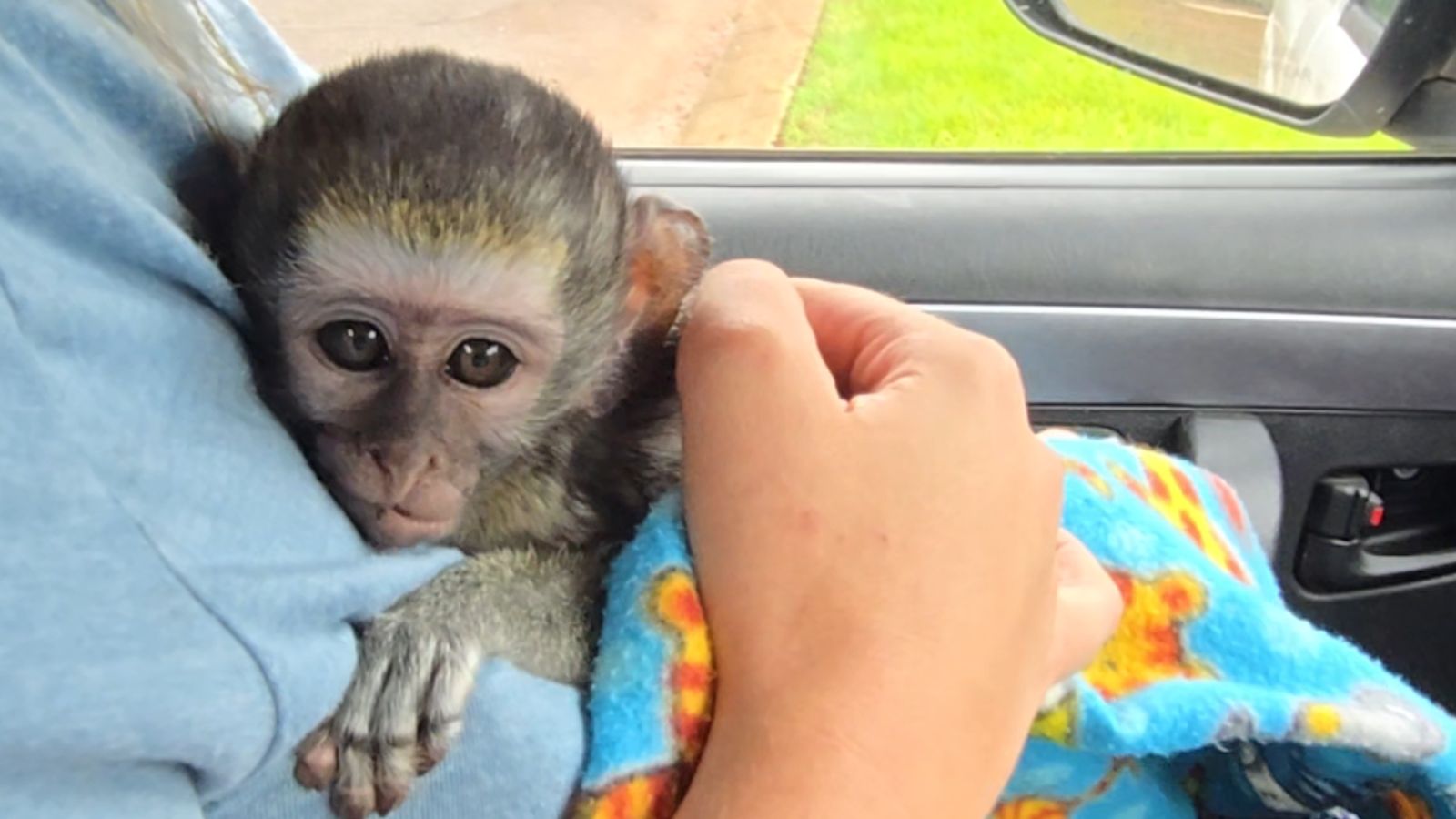
Welcome to the Vervet Monkey Foundation (VMF)! Established in 1993 in South Africa, our sanctuary was born out of urgent necessity. When a tiny orphaned baby vervet monkey was brought to founder Dave, he quickly discovered a tragic reality: there were no specialised facilities dedicated to rehabilitating or protecting this indigenous species, which is frequently misunderstood, orphaned through human conflict, or targeted as pests. What started with a single orphan soon evolved into a lifeline for thousands. Our Mission Our core mission is simple yet profound: to provide a sanctuary for abused, orphaned, injured, and lab-rescued vervet monkeys, while working tirelessly to conserve the species and their natural habitats. We believe that every monkey deserves a life free from exploitation, surrounded by their own kind. The VMF Story & Breakthroughs Over the past three decades, VMF has pioneered groundbreaking primate rehabilitation. We don’t just house monkeys; we help restore their identity. We achieved a world-first by successfully rebuilding natural, self-sustaining social structures from orphaned individuals, allowing them to form deep, complex bonds within a troop. From the intensive, around-the-clock care in our sickbay for vulnerable babies, to the gradual and rewarding process of integrating monkeys into a family, our work covers every stage of recovery. The Volunteer Experience As a volunteer, you are the backbone of our foundation. You won’t just be watching from the sidelines; you will be directly involved in making a difference. Your days will include preparing specialised diets, constructing and repairing essential infrastructure, assisting with enrichment activities to keep the monkeys stimulated, and witnessing incredible milestones—such as seeing an underweight orphan take its first brave steps into a new troop. By volunteering with us, you become a vital part of our ongoing history, helping us give these beautiful primates a second chance.
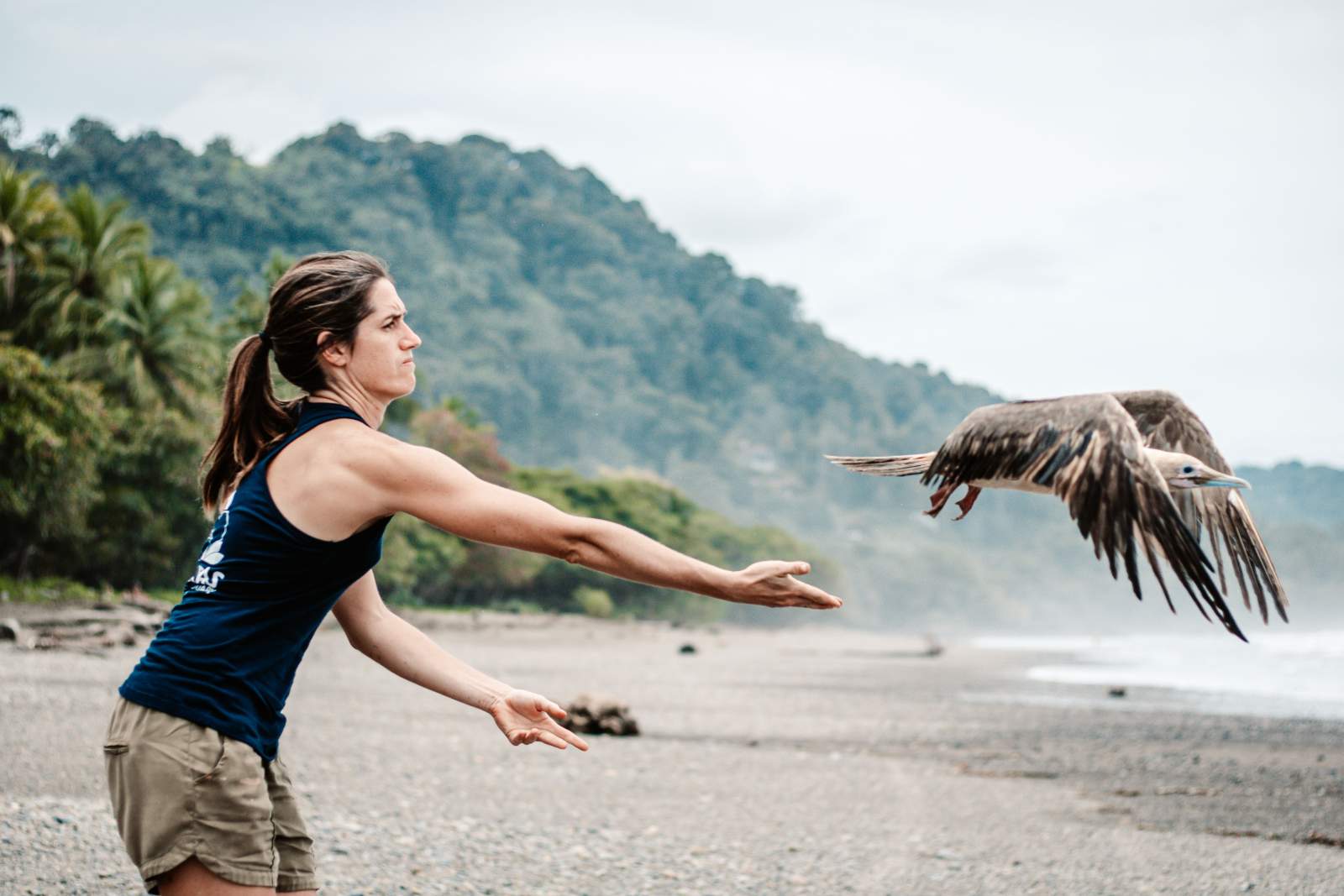
Alturas Wildlife Sanctuary is a nonprofit rescue and rehabilitation center located in the southern Pacific region of Costa Rica. Our mission is to give injured, orphaned, and displaced wildlife a second chance while raising awareness about the importance of conservation. We envision a future where wildlife thrives safely in its natural habitat. Every year, we rescue more than 700 animals, release as many as possible back into the wild, and educate over 1,000 visitors. We are the only wildlife rescue center serving three major conservation areas that together protect 19.7% of Costa Rica’s territory. Alturas Wildlife Sanctuary began in 2014 as a small rescue project responding to the increasing number of animals affected by human development in the region. What started with only a few enclosures and a small team has grown into a fully equipped sanctuary with a veterinary clinic, nursery, research programs, and year-round internship and volunteer opportunities. Today, we are recognized as a leading center for wildlife rescue, rehabilitation, and education in the region. 01. Fully Equipped Veterinary Center Our veterinary team works year-round to treat injured and orphaned wildlife. The clinic includes surgical equipment, diagnostic tools, and a specialized nursery with incubators for baby animals. 02. Sanctuary Some animals cannot safely return to the wild. For most of them, this is because they were kept as illegal pets. Our sanctuary provides long-term, species-appropriate care while maintaining the primary goal of releasing as many animals as possible. Interns support our veterinary, sanctuary, and orphan-care teams, gaining hands-on experience in wildlife rehabilitation and research, while also participating in nighttime emergencies and clinical procedures.
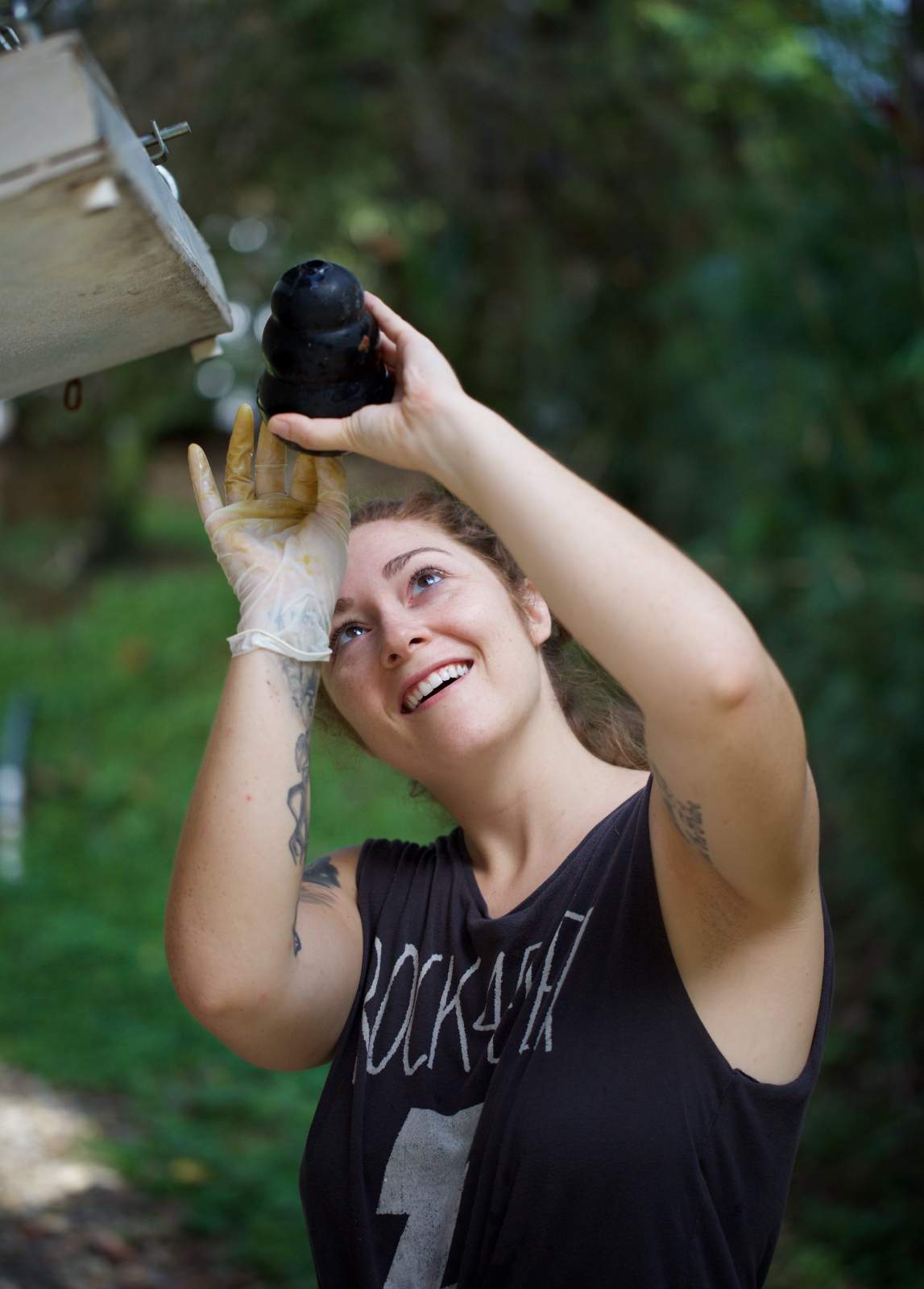
Alturas Wildlife Sanctuary is a nonprofit rescue and rehabilitation center located in the southern Pacific region of Costa Rica. Our mission is to give injured, orphaned, and displaced wildlife a second chance while raising awareness about the importance of conservation. We envision a future where wildlife thrives safely in its natural habitat. Every year, we rescue more than 700 animals, release as many as possible back into the wild, and educate over 1,000 visitors. We are the only wildlife rescue center serving three major conservation areas that together protect 19.7% of Costa Rica’s territory. Alturas Wildlife Sanctuary began in 2014 as a small rescue project responding to the increasing number of animals affected by human development in the region. What started with only a few enclosures and a small team has grown into a fully equipped sanctuary with a veterinary clinic, nursery, research programs, and year-round internship and volunteer opportunities. Today, we are recognized as a leading center for wildlife rescue, rehabilitation, and education in the region. 01. Fully Equipped Veterinary Center: Our veterinary team works year-round to treat injured and orphaned wildlife. The clinic includes surgical equipment, diagnostic tools, and a specialized nursery with incubators for baby animals. 02. Sanctuary: Some animals cannot safely return to the wild. For most of them, this is because they were kept as illegal pets. Our sanctuary provides long-term, species-appropriate care while maintaining the primary goal of releasing as many animals as possible.

Founded in 2013, MRCI is a government-approved organization dedicated to environmental research, conservation, community development, medical assistance, and content creation in Madagascar. Our work spans marine, forest, and turtle conservation, as well as English teaching and infrastructure projects in remote villages. In partnership with international organizations, we support long-term monitoring and species-focused initiatives to protect Madagascar’s unique biodiversity, both on land and underwater. We provide a safe, inclusive environment for volunteers from around the world to create meaningful impact while fostering personal growth. Through sustainable research, conservation action, medical outreach, content development, and community engagement, we help improve local health and education. We also collaborate with other organizations to build a more resilient, inclusive, and sustainable future for Madagascar.

The sole purpose of our project is to care for the welfare and well-being of domesticated elephants. At ECRF, we prioritize the mental and physical health of the elephants under our care. We do not engage in riding or exploitative activities with our elephants. Mornings begin with cleaning the elephants’ beds, collecting food for the day, preparing vitamin balls (sometimes containing necessary medicine), and assisting with day-trip visitors. Renting and maintaining elephants is extremely expensive, and the project relies solely on donations and volunteer support, which is why we ask for a fee to join. Our dream is to buy a piece of land where our elephants can roam as freely as possible. We aim to educate as many people as possible about the realities of tourist attractions and the logging industry, so we hope you will have many questions to ask.

Zoorefugio Tarqui is a wildlife rescue center in the Ecuadorian Amazon, founded in 2008 to protect animals affected by illegal trafficking. The center provides care, rehabilitation, and safe housing for a variety of species, including monkeys, reptiles, felines, and birds, while promoting conservation and environmental awareness in the local community. Volunteers support daily tasks such as animal care, feeding, enclosure maintenance, and enrichment activities. The experience offers hands-on learning, cultural exchange, and the opportunity to live in nature while contributing directly to wildlife protection.

IPBio is a non-governmental, non-profit organization focused on environmental education and scientific research in biodiversity, ecology, and the behavior of Brazilian fauna and flora. It works to support conservation projects across ecosystems in Brazil. IPBio is partnered with FreeWildlifeBrazil Celine, a non-profit dedicated to native bird release. In 2024, both organizations merged into a joint program, combining efforts to protect wildlife through shared volunteer and internship initiatives.

IPBio – Biodiversity Research Institute is a non-governmental, non-profit organization focused on environmental education and scientific research on biodiversity, ecology, and the behavior of flora and fauna in Brazilian ecosystems. Its reserve is accredited as an “advanced outpost” by UNESCO. IPBio has contributed to publications in leading scientific journals such as Science and Nature – Scientific Reports. The organization also supports both indirect conservation through sustainable development and direct conservation through reforestation and a wildlife release center in the Atlantic Forest.

Founded in 2013, MRCI is a government-approved organisation in Madagascar working across environmental research, conservation, community development, medical assistance, and content creation. Its projects focus on marine, forest, and turtle conservation, alongside education and infrastructure support in remote villages. In partnership with international organisations, MRCI conducts long-term biodiversity monitoring and species protection initiatives on land and underwater. It also supports community health and education while providing a safe, inclusive space for global volunteers to contribute to sustainable development and conservation in Madagascar.

We are a marine conservation organisation with over a decade of hands-on experience protecting the reefs of Koh Tao. Our focus is to protect coral reefs through restoration, research, education, and community action. We train both divers and non-divers to take part in real conservation work, including coral restoration, reef monitoring, citizen science, internships, and environmental initiatives. We collaborate with local dive centres to promote a united, science-based approach to reef protection. As climate change and human impact continue to threaten marine ecosystems, our mission is to provide practical skills and real field experience that participants can apply beyond the program. Our projects focus on both natural and artificial reefs, collecting long-term data and actively supporting reef health improvement. Whether beginner or experienced, everyone can get involved in meaningful marine conservation.

A Love Story That Inspired DAKTARI Ian and Michèle Merrifield officially opened DAKTARI Bush School in 2006, after years of dedication and hard work. They first met while Ian was working as a game ranger at Tshukudu Game Lodge and Michèle was volunteering there. While caring for injured zebras, wildebeest, and warthogs, they fell in love and shared a vision of protecting wildlife through education. DAKTARI’s mission is to educate and inspire local children to value their environment while supporting community development. Located in the South African bush near Kruger National Park, DAKTARI Bush School & Wildlife Orphanage is a local NGO founded in 2006. The organization provides environmental education programs where children stay at DAKTARI for five days to learn about wildlife conservation and their natural heritage. Children also help care for animals that cannot be released back into the wild, helping develop empathy, respect, and responsibility toward wildlife. Volunteers from around the world support the program by teaching lessons and helping guide children in animal care activities. In addition, DAKTARI runs an Outreach Program, including weekly ECO Clubs and Wildlife Crime Campaigns, to inspire positive attitudes toward environmental conservation within local communities.

Bali offers several eco-tourism and conservation programs focused on marine ecosystems, including sea turtle conservation, coral reef restoration, and mangrove rehabilitation. These marine camps are typically immersive volunteer or educational experiences run in collaboration with local communities in Bali. The programs combine hands-on activities with environmental education and are designed for volunteers, students, groups, and eco-tourists. Sea Turtle Conservation: Volunteers work closely with turtle conservation activities, including monitoring nesting beaches, collecting data for conservation methods, observing feeding grounds, and assisting in the care of injured turtles in rehabilitation centers. Coral Reef Protection: Coral reefs play a vital role in marine ecosystems, providing habitat for fish and crustaceans. Activities include reef cleaning, coral restoration, reef monitoring, and supporting coral planting programs while helping protect reefs from pollution. Mangrove Ecosystems: Mangroves are essential coastal ecosystems that support biodiversity, produce oxygen, and filter air and water. Volunteer activities include mangrove planting, biodiversity monitoring, and education on their role in coastal protection.

Ecotourism Nusa Penida was created by our conservation community, Nuansa Pulau, which has been committed to protecting the environment since 2017. Since then, we have planted more than 95,000 corals. We actively rehabilitate coral reefs and mangrove forests, preserve traditional seaweed farming practices, and work toward a sustainable future for the island while educating the next generation.

Eco Hero Conservation is a marine research and conservation program based in Nusa Penida, Indonesia, that trains and educates divers in the conservation of marine megafauna. We are always looking for marine enthusiasts to join our research diver training program and research team. This conservation program builds on the experience and expertise of volunteers from around the world. Coral reefs are essential to both human and marine life. They provide habitat for a wide variety of species and protect coastlines from erosion and storms. However, reefs are under severe threat from human activities such as irresponsible fishing, pollution, and climate change. Conservation is therefore essential, including keeping coastlines clean, preventing erosion, practicing sustainable fishing, avoiding coral damage, involving local communities, improving management capacity, and rehabilitating damaged reefs. We believe true conservation lies in allowing nature to function with minimal human interference. However, human activities such as plastic pollution, overfishing, and destructive practices disrupt this balance. As our work is ocean-based, we combine marine activities with ecological education. Participants may join a divemaster internship with marine ecology specialties, contributing to daily data collection on manta rays, turtles, and fish, learning about corals, and participating in coral propagation programs. We also organize beach and reef cleanups, awareness activities, and community support such as teaching English to local children. The internship includes training, materials, instructor support, and certification. Accommodation and lunch are provided on ocean training and research days.

I'm Ruth, and I discovered the Maldives over 20 years ago while visiting as a scuba diver in search of manta rays and whale sharks. I was fortunate to form close friendships with Maldivian locals who welcomed me into their homes to share dinners, afternoon hedhika, coffee, and betel nuts. My love for the country led me to visit over 30 times before co-founding Secret Paradise in 2012. My experience of Maldivian hospitality shaped our community-based tours, designed to connect travelers with local families, businesses, and NGOs. I feel privileged to call the Maldives my home and deeply respect its people, culture, and fragile natural environment. The Maldives Whale Shark Research (MWSR) is a research-based conservation charity dedicated to studying whale sharks and supporting marine conservation in the Maldives and Indian Ocean. Since 2006, it has become the only long-term organization focused on whale shark research in the Maldives. Its mission is to advance scientific knowledge and support conservation policy through collaboration with local communities and stakeholders, helping protect marine biodiversity and the ecosystems that sustain livelihoods and culture. Secret Paradise Maldives is an award-winning, positive-impact tour company and certified Travelife Partner and Climate Literate business. Recognized for sustainability and responsible tourism, we create immersive travel experiences beyond traditional beach tourism. Whether you are a solo traveler, couple, family, or friends, we offer guided tours that immerse you in Maldivian culture, marine life, and local communities. Our experienced local guides accompany all tours and are trained in first aid, snorkeling safety, and lifeguarding, ensuring safe and meaningful travel. Our guests travel responsibly, engaging deeply with the destination while treading lightly on the environment and contributing positively to local communities.

United Tansania e.V. is a German NGO, registered in 2021 and based in Tanzania. We study both hyena species: the striped hyena, classified as Near Threatened by the IUCN, and the spotted hyena, which is threatened by habitat loss, climate change, and human-wildlife conflict. To understand the drivers of sustainable carnivore survival outside protected areas, we work on mitigation solutions with communities that experience hyena conflicts. Due to their negative reputation and responsibility for livestock losses, hyenas are subject to high levels of persecution, including the use of snares. Our team, led by a veterinarian and supported by local trackers and camp staff, is committed to empowering local communities and conducting research on spotted and striped hyenas. Our long-term goals include developing effective strategies for carnivore conservation and improving animal health.

In 2010, Dr. Edward Louis, who has worked in Madagascar since 1998, established the Madagascar Biodiversity Partnership (MBP), a Malagasy non-governmental organization created to expand innovative conservation projects throughout the country. MBP is dedicated to protecting Madagascar’s unique forests and biodiversity while sustainably improving the quality of life for local communities that rely heavily on natural resources. Guided by the belief that “everything is connected,” or “Mampifandray ny tontolo,” MBP combines conservation, education, research, and community development to achieve long-term sustainability for both people and the environment. Through this volunteer program, MBP aims to support conservation research, community-based conservation, education, and outreach activities. Volunteers contribute to projects that help preserve the environment, support sustainable development, and strengthen local understanding of conservation challenges and solutions. MBP works closely with local communities to encourage environmental awareness, improve educational opportunities, and create empowerment initiatives that benefit residents living near conservation areas. Volunteers may assist with environmental education, research support, outreach programs, and other community-focused activities designed to create a lasting positive impact. The main project site is the Grewcock Ihofa Vohitsara Bioreserve (GIVB) in central-east Madagascar. This area is rich in biodiversity and provides volunteers with a unique opportunity to experience Madagascar’s natural beauty while contributing to meaningful conservation and community efforts.

We, Volunteer International Adventures, are a passionate, hands-on organisation based in Africa, with a dedicated team creating meaningful volunteer experiences since 2008. We welcome students, travellers, families, friends, gappers, and career breakers to join our ethical projects in South Africa, Zambia, Zanzibar, and Zimbabwe, focusing on animal and youth projects. We believe in responsible and inclusive volunteer travel, offering opportunities that not only support important projects but also allow volunteers to fully immerse themselves in the local culture, build real connections, and create lifelong memories. Our local teams are committed to your journey by ensuring your safety, supporting your personal growth, and guiding you every step of the way so you can focus on making a genuine difference where it is needed most. Volunteers in our Knysna projects can contribute in areas such as veterinary medicine, animal care, youth development, social work, teaching, early childhood care, sports coaching, and community development with NPOs.